


- Stock: In Stock
- Model: Blade 5
- Weight: 0.02kg
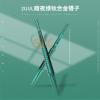
The Hong Hai Tong 5 No. IC Glue Removal Blade for Mobile Motherboard Repair is a specialized curved hook-and-scrape micro-blade engineered for digging, raking, and clearing tough epoxy underfill, black cured sealant, and edge resin from dense smartphone motherboards. Forged from ultra-thin elastic spring steel, the No. 5 profile features a distinctive curved radius tip that allows technicians to reach deep into perimeter chip trenches, extracting cured underfill around microchips without gouging solder mask, slicing traces, or dislodging adjacent surface-mount components.
While straight or angled blades (such as the No. 4) excel at shearing and slicing flat edges, the No. 5 hook profile is specifically designed to pull and scoop softened glue out from tight crevices between large BGA packages (CPU, NAND Flash, Baseband, and PMIC) and crowded 0201/01005 passives. Its hand-ground, non-aggressive scraping bevel glides along the PCB surface under hot air assistance, peeling away cured resin cleanly with zero copper pad damage.
Key Engineering Features & Bench Advantages:
- No. 5 Precision Hook Geometry: The radius hook profile is contoured specifically for trench dragging and clearing tight IC perimeters, scooping softened adhesive out from confined spaces where straight blades cannot reach.
- Elastic Spring Steel Construction: Combines high torsional rigidity with subtle lateral elasticity, bending safely under slight hand pressure rather than digging sharply into the fiberglass core or scraping off the green/black solder mask.
- Hand-Polished Non-Cutting Bevel: Ground to a scraping edge rather than a razor blade, allowing it to strip hot adhesive without cutting into copper traces, scoring gold test pads, or shearing jumper wires.
- Thermal Shock Stability: Retains metallurgical hardness, spring temper, and profile shape even under direct hot air stream exposure ranging from 240°C to 280°C.
- Universal Micro-Chuck Fit: Designed with a standardized slotted tang that fits firmly into all universal micro-scalpel handles, rotary brass collets, and dedicated Hong Hai Tong / Mechanic / QianLi handpieces.
- Anti-Corrosion Surface Finish: Treated to resist chemical staining, oxidation, and corrosion caused by active rosin fluxes, PCB de-fluxers, and 99% isopropyl alcohol (IPA).
Technical Specification Matrix
Parameter Profile | Product Specification Details |
Product Brand | Hong Hai Tong (HHT) |
Model / Profile | No. 5 Curved Hook / Trench Scraping Blade |
Blade Material | High-Elasticity Spring Steel / High-Carbon Alloy |
Tip Thickness | Ultra-Thin (~0.10mm – 0.12mm) |
Working Temperature | Heat-resistant up to 300°C under continuous hot air |
Handle Compatibility | Universal micro-knife collets and hobby craft handles |
Primary Bench Applications | Trench glue scooping, underfill hook removal, CPU corner clearing, black resin cleanup |
Bench Application & Usage Guide:
- Handle Installation: Seat the No. 5 blade shank securely into your micro-handle collet and tighten the chuck collar completely to prevent blade play during delicate scraping.
- Thermal Softening: Set your hot air rework station to 240°C–260°C at low-to-medium airflow. Gently preheat the perimeter of the targeted BGA chip for 15–20 seconds until the epoxy sealant softens into a gummy consistency.
- Hook Scraping: Position the curved No. 5 hook tip in the trench between the IC and surrounding capacitors. Draw the hook toward you in smooth, controlled pulling motions, raking out softened glue ribbons without pressing down into the board laminate.
- Post-Removal Pad Dressing: After desoldering and lifting the chip, run hot air over the remaining pad area and use the curved belly of the No. 5 blade to scrape residual glue cleanly off the pad grid without snagging copper landings.
- Final Board Cleaning: Let the logic board cool below 60°C. Clean all scraped adhesive crumbs and flux residue using an ESD brush soaked in 99% IPA.